Mon to Friday: 8.00 am - 7.00 pm



When procurement managers analyze the plastic raincoat price, they often find a confusing gap between ultra-cheap disposable options and high-performance industrial rainwear. Understanding the cost drivers is essential for balancing budget constraints with the actual protective requirements of the end-user.
The pricing of waterproof outerwear is rarely a flat rate; it is a calculation of material denier, coating technology, and manufacturing precision. From simple PE ponchos to breathable polyester jackets with waterproof coatings, the price reflects the garment's lifecycle and its ability to withstand environmental stress.
This guide examines the variables that influence the cost of bulk rainwear, helping buyers distinguish between superficial savings and long-term value in the apparel manufacturing sector.

Deciphering the Cost Structure of Waterproof Rainwear

The perceived value of a plastic raincoat is often mistaken for its simple utility. However, the professional garment industry categorizes pricing based on the intersection of fabric weight, waterproofing method, and structural complexity. A "plastic" raincoat can range from a single-use disposable film to a high-grade polyester textile with a specialized waterproof coating.
Core cost drivers include the raw material—such as polyester or PE—and the application of coatings. For instance, a jacket that incorporates a hidden hood with Velcro closures and adjustable elastic ropes requires more labor and components than a basic poncho, directly increasing the unit price.
Furthermore, the scale of the order (MOQ) plays a pivotal role. In the apparel manufacturing sector, moving from a small batch to an order of 1,000 pieces allows for the optimization of material cutting and production line efficiency, which significantly lowers the per-unit cost.
Material Specifications and Their Impact on Pricing
Fabric choice is the primary determinant of the final price. Polyester fabrics with waterproof coatings offer a superior balance of breathability and durability compared to pure PVC or PE films. The addition of features like metal zippers with custom logo labels and adjustable elastic cuffs transforms a basic utility item into a professional piece of function wear.
Construction details also add incremental costs. A high-quality jacket that can be pocketed into its own pocket requires a specific design architecture and precise sewing to ensure the garment remains functional after folding. This "packable" feature is a high-value addition for travel and camping applications.
Quality control standards, such as AQL 2.5-4.0, ensure that the cost paid translates into a product with minimal defects. When a supplier adheres to BSCI or SMETA 4P audits, the price may reflect the cost of maintaining ethical labor and safety standards, which is a critical requirement for international corporate buyers.
Application Scenarios for Different Rainwear Tiers
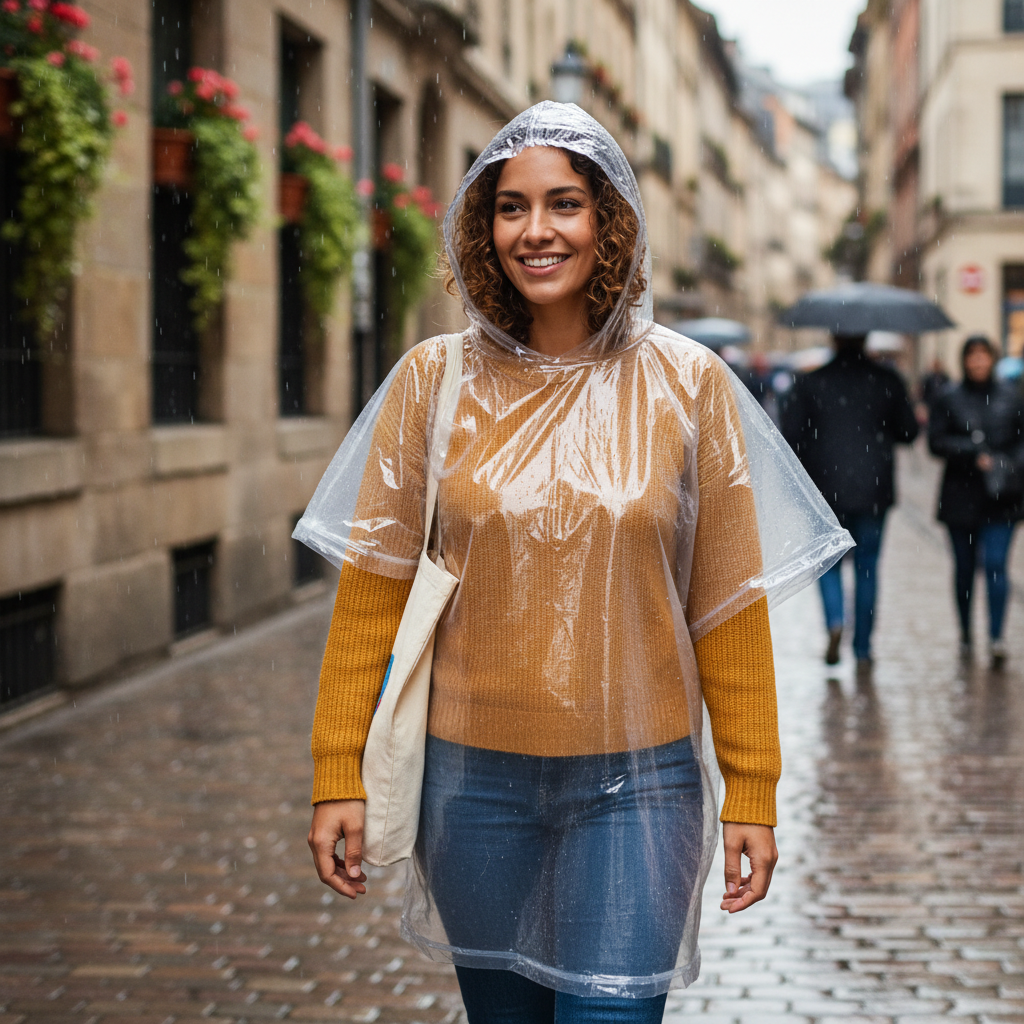
Different environments demand different levels of protection, and thus, different pricing tiers. Disposable ponchos are designed for short-term event use or emergency kits, where the priority is the lowest possible unit cost and ease of distribution.
In contrast, professional men's and women's rain jackets are geared toward daily commutes or light industrial work. These require breathable materials to prevent internal condensation and reinforced seams to prevent leaking under prolonged exposure to rain. The inclusion of Pantone color printing for OEM logos allows these products to serve as high-visibility corporate branding tools.
Specialized categories, such as children's rainsuits or pet raincoats, involve different sizing complexities and safety considerations (such as EN71 compliance for kids' wear), which can influence the pricing structure relative to standard adult sizes.
Comparing Performance vs Cost in Bulk Procurement
To evaluate the efficiency of a purchase, buyers must look at the "protection-per-dollar" ratio. While low-cost PE materials offer immediate waterproofing, their breathability is near zero, and their tear strength is minimal compared to coated polyester.
The following data represents the relative performance of different material grades across key indicators, demonstrating how a slight increase in investment in higher-grade fabrics leads to a disproportionate increase in garment longevity and user comfort.
plastic raincoat price Performance Metrics
As illustrated, the gap in durability and breathability between entry-level plastic and professional-grade polyester is significant. For B2B buyers, selecting a product that meets the minimum operational threshold for durability reduces the frequency of replacement, effectively lowering the total cost of ownership.
Critical Factors for Evaluating Rainwear Suppliers
When sourcing rainwear, the lowest quote is rarely the safest choice. A professional supplier must demonstrate a comprehensive quality management system. The use of the AQL 2.5-4.0 inspection standard is a benchmark for ensuring that batch consistency remains high across thousands of units.
Verify the supplier's technical capabilities, such as their ability to handle custom sizes and OEM logo printing. A supplier that provides free stock samples and a clear refund policy for OEM mould charges indicates a level of confidence in their production quality and a commitment to the client's specific design needs.
Furthermore, ensure the manufacturer adheres to global safety and environmental standards. Reports such as California 65, EN71, and BSCI are not just paperwork; they are guarantees that the materials used in the raincoats are safe for the wearer and produced under ethical conditions.
Emerging Material Trends in the Rainwear Industry
The industry is shifting toward "function wears" that blur the line between rain gear and everyday apparel. We are seeing an increase in the adoption of advanced polyester blends that offer higher hydrostatic head ratings while remaining lightweight enough for urban travel.
Eco-friendly coatings and recyclable polymers are likely to become standard requirements for European and North American markets. This evolution may lead to a slight increase in initial material costs but will likely be offset by stronger market demand for sustainable corporate apparel.
Integration of smarter design elements—such as improved ergonomic cuts for "Function Wears" and high-efficiency waterproof zippers—is expected to redefine the mid-to-high end segment of the rainwear market, moving away from the traditional "plastic" aesthetic toward a more professional look.
Decision Matrix for Selecting the Right Raincoat
Selecting the right product requires matching the garment's specifications to the intended use case. A disposable poncho is an excellent choice for a music festival, but it is an operational failure for a construction site or a professional corporate uniform.
The following matrix compares common rainwear categories based on procurement priorities, helping buyers align their budget with the required performance levels.
| Product Category | Primary Material | Key Value Driver | Ideal Use Case |
|---|---|---|---|
| Disposable Poncho | PE / Thin Plastic | Lowest Unit Cost | Event Giveaways |
| Child Raincoat | Waterproof Polyester | Safety / EN71 Compliance | School / Daily Wear |
| Men's Rain Jacket | Coated Polyester | Durability / Breathability | Professional Workwear |
| Function Wears | High-Grade Technical Fabric | Advanced Versatility | Travel & Outdoor |
| Rainsuit (Two-Piece) | Heavy Duty Polyester | Maximum Coverage | Industrial Rain Protection |
| Windbreaker | Lightweight Synthetic | Wind Resistance / Style | Light Rain / Urban |
By utilizing this matrix, procurement officers can avoid the common mistake of over-specifying for simple tasks or under-specifying for critical environments. For detailed product specifications and custom quotes, users can explore the options available at www.mayraincoat.com.
Frequently Asked Questions
Conclusion
Evaluating the plastic raincoat price requires a shift in perspective from "cost per unit" to "value per application." By understanding the technical differences between PE films and coated polyester, and by prioritizing suppliers with verified audit reports, procurement managers can secure rainwear that is both budget-friendly and functionally reliable.
Whether you are sourcing disposable gear for a large-scale event or professional function wear for a corporate workforce, the balance of material, design, and quality control is the only way to ensure long-term satisfaction. Interested parties can review a comprehensive range of rainwear solutions and company capabilities through www.mayraincoat.com.