 rainwears@163.com may@may-rain.com
 Mon to Friday: 8.00 am - 7.00 pm



Waterproof Performance of Bicycle Rain Gear for Commuters and Touring Riders
Rain protection is one of the most important factors for cyclists who ride daily or travel long distances. Whether using bicycle rain gear commuter, bicycle raincoat, or full bicycle touring rain gear, the effectiveness of waterproofing directly determines comfort, safety, and riding efficiency. High-quality bicycle rainwear is designed not just to block rain, but also to manage breathability, wind resistance, and long-term durability under changing weather conditions.
Understanding how different rain gear performs in real cycling environments helps riders choose the right protection system. From short city commutes to multi-day tours, waterproof performance remains the core function of every bike commuter rain gear setup.
Waterproof Technology in Bicycle Rain Gear
Modern bicycle rain gear commuter products rely on advanced waterproof materials such as polyurethane (PU) coatings, thermoplastic membranes, and multi-layer laminated fabrics. These technologies are designed to prevent water penetration while maintaining flexibility during pedaling.
A key feature of high-performance bicycle raincoat designs is the use of sealed or taped seams. Even if the fabric itself is waterproof, water can still enter through stitching points. Heat-taped seams eliminate this weak point, ensuring complete water resistance during heavy rain.
In addition, many bicycle rainwear systems use hydrophobic outer coatings such as Durable Water Repellent (DWR). This coating causes rainwater to bead and roll off the surface instead of soaking into the fabric. However, DWR alone is not enough for heavy rain—it must be combined with a waterproof membrane to achieve full protection.
Breathability is another important factor. While bike commuter rain gear must block rain effectively, it also needs to allow sweat vapor to escape. Without breathability, riders can become wet from condensation inside the garment, which reduces comfort. Premium materials balance both waterproofing and ventilation through microporous membranes that block liquid water but allow air flow.
Another advantage of modern bike rain coat technology is lightweight construction. Unlike traditional heavy rainwear, modern cycling-specific materials are thin yet highly effective, allowing riders to maintain mobility and speed without feeling restricted.
Real-World Performance of Bike Commuter Rain Gear in Heavy Rain
In daily commuting scenarios, bike commuter rain gear is exposed to constant environmental challenges such as traffic spray, wind-driven rain, and temperature fluctuations. The waterproof effectiveness depends not only on fabric quality but also on design details such as fit, coverage, and closure systems.
A well-designed bicycle raincoat typically features extended back panels to protect the rider’s lower back while leaning forward. Adjustable cuffs, waterproof zippers, and storm flaps further prevent water from entering at vulnerable points.
One of the most important performance indicators is hydrostatic head rating, which measures how much water pressure a fabric can withstand before leaking. High-quality bicycle rain gear commuter products often exceed 10,000 mm, making them suitable for sustained heavy rain conditions.
Wind resistance also plays a role in waterproof performance. Strong wind can push rain against fabric surfaces with greater force, testing the limits of the waterproof layer. A properly designed bike rain coat reduces wind penetration through fitted cuffs, high collars, and adjustable hems.
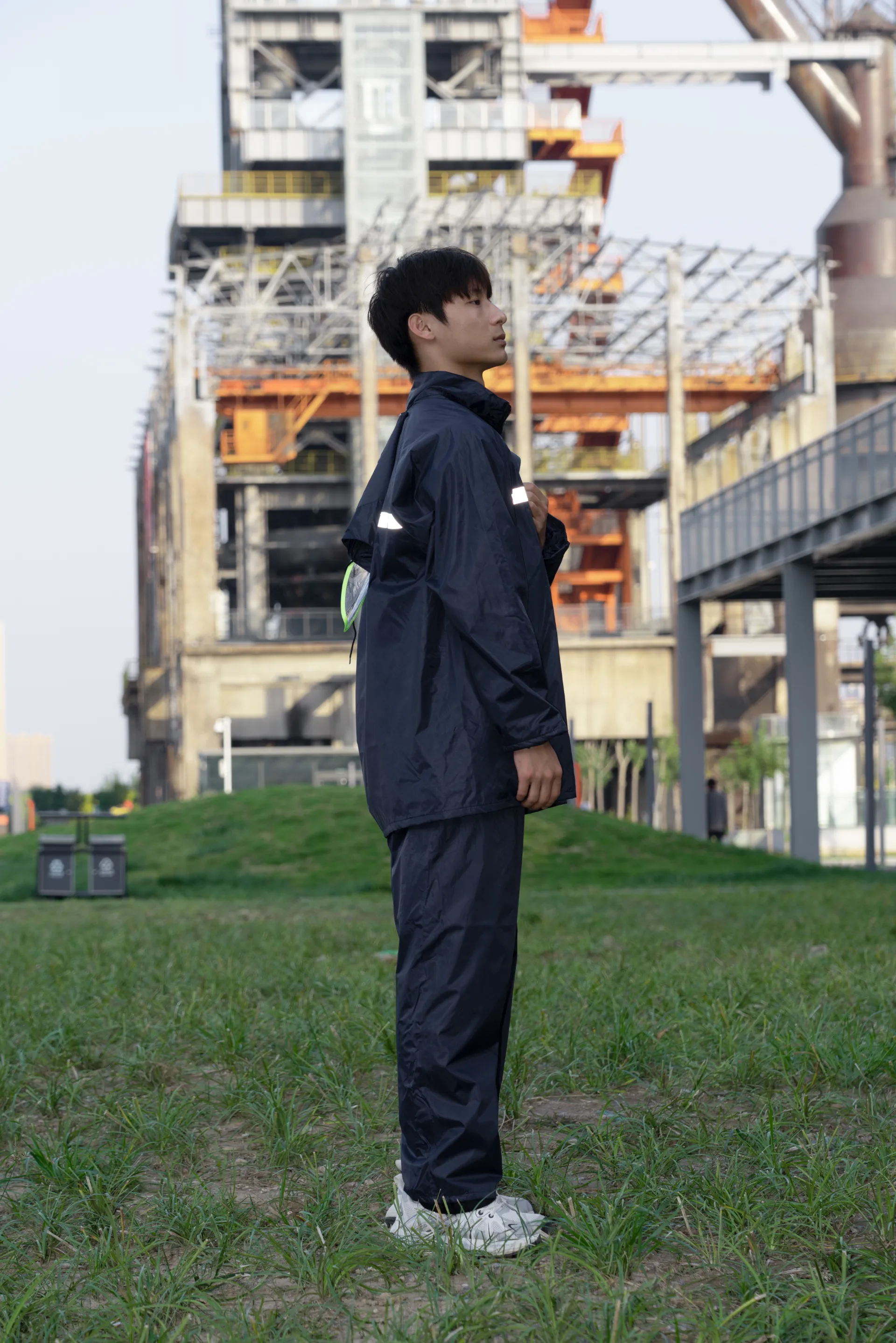
For city riders, visibility is another key concern. Many bike commuter rain gear systems incorporate reflective strips or bright color panels. While this does not affect waterproofing directly, it enhances safety in rainy and low-light conditions.
Durability is also critical in urban commuting environments. Frequent use, backpack friction, and folding can degrade waterproof coatings over time. High-end bicycle rainwear maintains performance through reinforced fabric zones and abrasion-resistant outer layers.
Waterproof Performance in Bicycle Touring Rain Gear
Long-distance cyclists require more advanced protection, making bicycle touring rain gear a specialized category. Unlike commuter gear, touring rainwear must withstand continuous exposure to rain, mud, and changing climates over multiple days.
A major advantage of premium bicycle touring rain gear is multi-layer construction. These garments often use a three-layer system: an outer protective layer, a waterproof membrane, and an inner lining. This structure significantly improves waterproof reliability while maintaining comfort during long rides.
During extended cycling tours, condensation control becomes especially important. If a rider spends hours in wet conditions, poorly designed gear can accumulate internal moisture. High-performance bicycle rainwear solves this problem through breathable membranes that actively release moisture while blocking external rain.
Another important feature is packability. Touring cyclists often carry limited space, so bicycle rain gear commuter upgrades designed for touring are lightweight and compressible. Even fully waterproof jackets and pants can be folded into small storage sizes without damaging the waterproof layer.
Seam durability is also more critical in touring environments. Continuous movement and exposure to weather conditions can stress stitching points. That is why advanced bicycle touring rain gear uses reinforced seam sealing and double-layer stitching in high-stress areas.
For long rides, adaptability matters as well. Weather conditions can change quickly, so modular bike rain coat systems often include detachable hoods, ventilation zippers, and adjustable layering options. These features allow riders to respond quickly without compromising waterproof performance.
Finally, long-term water resistance is essential. Unlike casual commuting gear, touring equipment must maintain performance over weeks or months of use. High-quality bicycle rainwear resists coating degradation and retains its waterproof properties even after repeated washing and compression.
Whether for city commuting or long-distance cycling, the effectiveness of bicycle rain gear commuter, bicycle raincoat, bicycle touring rain gear, and bike commuter rain gear ultimately depends on waterproof technology, seam sealing, and material quality.
Modern bike rain coat designs combine lightweight comfort with advanced waterproof membranes, ensuring riders stay dry without sacrificing mobility. As cycling continues to grow as a daily transport and adventure activity, high-performance bicycle rainwear remains essential for safety, comfort, and endurance in all weather conditions.
-
Waterproof Performance of Men’s Raincoats in Modern Outdoor Protection
NewsMay.15,2026
-
Waterproof Performance of Modern Men’s Rain Jackets Across Different Styles and Uses
NewsMay.15,2026
-
Waterproof Performance of Long Poncho Raincoats for Men
NewsMay.15,2026
-
Reflective Rain Gear and Waterproof Performance in Modern Outdoor Jackets
NewsMay.15,2026
-
Men’s Raincoats: Stay Stylish and Dry on Rainy Days
NewsApr.23,2026

-

-

-
 Rm.1816 No. 44 Jianshe north street, Shijiazhuang, China


