The beige raincoat is a staple of transitional weather wear, offering a blend of practicality and style. Its neutral tone makes it incredibly versatile, pairing well with a wide range of outfits and color palettes. Beyond its aesthetic appeal, a quality beige raincoat provides crucial protection from the elements, keeping you dry and comfortable in unpredictable conditions. This seemingly simple garment has a rich history and continues to evolve with modern innovations in fabric technology and design.
The global demand for rainwear, including the beige raincoat, is substantial and consistently growing. Factors driving this demand include increasing rainfall due to climate change, a rise in outdoor activities, and a greater awareness of the importance of protective clothing. According to the World Meteorological Organization, extreme weather events, including heavy precipitation, are becoming more frequent and intense. This creates a clear need for reliable rain protection, making the beige raincoat a relevant and sought-after item worldwide.
The beige raincoat isn't simply a piece of clothing; it represents preparedness, practicality, and a touch of understated elegance. Understanding its construction, materials, and evolving technologies is crucial for both consumers seeking quality and manufacturers striving to meet the growing global demand. From classic trench coat styles to modern, lightweight designs, the beige raincoat continues to adapt to modern lifestyles and environmental challenges.
The Evolution and Significance of the beige raincoat
The beige raincoat’s origins can be traced back to the 19th century with the development of waterproof fabrics like Macintosh cloth. Originally intended for military use, these early raincoats were heavy and cumbersome. However, innovations in materials and design gradually led to the lighter, more fashionable beige raincoats we recognize today. The color itself gained popularity for its practicality, hiding dirt and water stains effectively.
The beige raincoat quickly transcended its purely functional purpose, becoming a symbol of sophistication and timeless style, particularly through its association with classic cinema and fashion icons. Its enduring appeal lies in its ability to balance practicality with a polished aesthetic, making it a versatile addition to any wardrobe. A well-made beige raincoat remains a statement piece, signifying both preparedness and refined taste.
Defining the beige raincoat: Style and Function
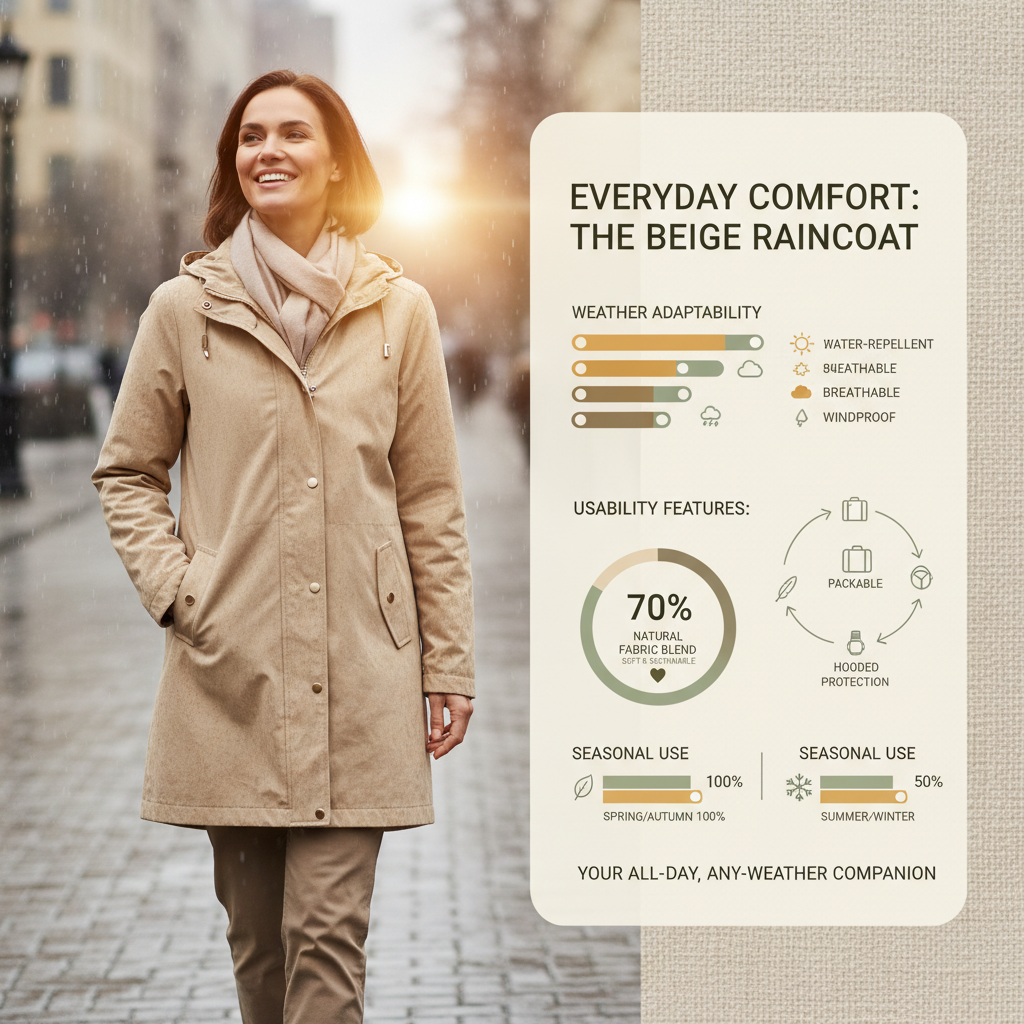
A beige raincoat is generally defined as a waterproof or water-resistant outer garment, typically ranging in shade from pale cream to a deeper tan, designed to protect the wearer from rain and wind. It’s characterized by its neutral color, allowing for easy coordination with a variety of outfits, and often features a hood and button or zip closure. The term “beige” encompasses a spectrum of light brown shades, lending the raincoat a classic and versatile aesthetic.
The modern beige raincoat extends beyond traditional trench coat styles. Contemporary designs incorporate lightweight, breathable fabrics, and streamlined silhouettes, catering to diverse needs and preferences. These advancements bridge the gap between functionality and fashion, ensuring the beige raincoat remains relevant in today's dynamic world. The focus is now on achieving optimal performance without sacrificing style or comfort.
The connection to modern industry lies in the constant pursuit of improved materials and manufacturing processes. Manufacturers are increasingly focused on sustainability, utilizing recycled materials and eco-friendly production methods to create beige raincoats that are both durable and environmentally responsible. This aligns with the growing consumer demand for ethical and sustainable products.
Key Features of a Quality beige raincoat
Durability is paramount when considering a beige raincoat. Look for jackets constructed from robust materials like coated nylon, polyester, or waxed cotton, ensuring resistance to wear and tear. Quality stitching and reinforced stress points also contribute to longevity. A truly durable beige raincoat will withstand years of use, providing reliable protection.
Waterproof rating is another critical factor. Measured in millimeters, this indicates the amount of water pressure the fabric can withstand before leaking. A higher rating signifies greater waterproofing capability. Consider the typical rainfall in your area when selecting a waterproof rating. Breathability is also essential; a raincoat should allow moisture vapor to escape, preventing discomfort and overheating.
Comfort features, such as a comfortable lining, adjustable cuffs, and a well-designed hood, enhance the overall user experience. A good fit is crucial – the raincoat should allow for layering without feeling restrictive. Consider features like pockets for added convenience and a detachable hood for versatility.
Practical Applications of the beige raincoat
The beige raincoat serves as essential everyday wear for commuters and urban dwellers, providing reliable protection from unexpected showers. Its neutral color ensures it complements a variety of outfits, making it a versatile addition to any wardrobe. Its lightweight designs allow for easy portability and storage.
For outdoor enthusiasts – hikers, campers, and travelers – a waterproof and breathable beige raincoat is crucial gear. It offers protection from the elements during outdoor adventures, ensuring comfort and safety. The neutral color blends well with natural surroundings, minimizing disturbance to wildlife.
In professional settings, such as construction or landscaping, a durable beige raincoat provides essential protection from the elements, allowing workers to perform their tasks comfortably and efficiently. The neutral color often aligns with company uniform policies and minimizes the visibility of dirt and grime.
beige raincoat Performance Comparison
Global Adoption and Market Trends of beige raincoat
The beige raincoat enjoys widespread popularity across diverse climates. In regions with frequent rainfall, such as the Pacific Northwest of the United States and the United Kingdom, it’s considered an essential wardrobe staple. Demand is particularly high during the autumn and winter seasons.
Emerging markets in Asia and South America are experiencing a growing demand for rainwear, driven by increasing urbanization and changing weather patterns. The rising middle class in these regions is seeking affordable and reliable protection from the elements. The market is seeing a shift toward more stylish and functional designs.
Current trends indicate a growing preference for sustainable and eco-friendly materials. Consumers are increasingly conscious of the environmental impact of their purchases and are seeking beige raincoats made from recycled or renewable resources. Manufacturers are responding by investing in innovative materials and production processes.
Advantages of Choosing a beige raincoat
A key advantage of the beige raincoat is its versatility. Its neutral color complements a wide range of outfits, making it suitable for various occasions, from casual outings to more formal events. Its adaptability streamlines wardrobe choices, saving both time and money.
Beyond aesthetics, a quality beige raincoat offers superior protection from the elements. Waterproof and breathable fabrics keep you dry and comfortable in wet conditions, while windproof designs shield you from chilly breezes. This combination of protection and comfort contributes to enhanced wellbeing.
From an environmental perspective, choosing a durable beige raincoat promotes sustainability. Investing in a long-lasting garment reduces the need for frequent replacements, minimizing waste and resource consumption. Look for options made from recycled materials for an even smaller environmental footprint.
Future Innovations in beige raincoat Technology
Researchers are actively developing new waterproof and breathable fabrics with enhanced performance characteristics. These innovations include bio-based materials and nanotechnology applications, offering improved water resistance, breathability, and durability. These advancements promise to elevate the performance and sustainability of the beige raincoat.
Smart textiles are emerging as a potential game-changer in the rainwear industry. Integrating sensors into the fabric could allow the beige raincoat to adapt to changing weather conditions, regulating temperature and providing real-time weather updates. This could lead to more personalized and effective protection.
Sustainable manufacturing processes are gaining traction, focusing on reducing water consumption, minimizing waste, and utilizing renewable energy sources. Companies are exploring closed-loop systems and circular economy models to create beige raincoats with a minimal environmental impact.
Challenges and Solutions in beige raincoat Production
One significant challenge is balancing waterproof performance with breathability. Many waterproof fabrics can trap moisture, leading to discomfort. Solutions include advanced membrane technologies and innovative fabric constructions that allow for optimal moisture vapor transmission.
Ensuring the durability of waterproof coatings is another hurdle. These coatings can wear off over time, reducing the raincoat’s effectiveness. Research into more resilient and long-lasting coatings, such as bio-based alternatives, is ongoing.
The environmental impact of manufacturing remains a concern. Addressing this requires adopting sustainable practices throughout the supply chain, from raw material sourcing to production and distribution. This includes utilizing recycled materials, reducing water and energy consumption, and minimizing waste.
Summary of Challenges and Solutions in beige raincoat Production
| Challenge Area |
Specific Issue |
Potential Solution |
Implementation Difficulty (1-10) |
| Performance |
Balancing Waterproofing & Breathability |
Advanced Membrane Technologies |
6 |
| Durability |
Wear & Tear of Waterproof Coatings |
Bio-Based Coating Alternatives |
7 |
| Sustainability |
Raw Material Sourcing |
Recycled Polyester & Nylon |
4 |
| Production |
Water Consumption |
Closed-Loop Water Recycling Systems |
8 |
| Waste |
Fabric Scraps |
Pattern Optimization & Upcycling |
5 |
| Supply Chain |
Transparency & Traceability |
Blockchain Technology |
9 |
FAQS
For longevity, look for a beige raincoat made from durable materials like waxed cotton or tightly woven nylon or polyester with a waterproof coating. These fabrics offer excellent resistance to abrasion and weathering. Reinforced stitching and quality zippers are also crucial. Consider a DWR (Durable Water Repellent) finish for added protection. A well-constructed beige raincoat should provide years of reliable service.
Regular care is vital for maintaining your beige raincoat's waterproof capabilities. After each use, rinse off any dirt or debris with clean water. Avoid using harsh detergents or bleach, as these can damage the waterproof coating. Periodically re-apply a DWR treatment to restore water repellency. Store your raincoat in a dry, well-ventilated area, away from direct sunlight. Following these steps will help prolong its life and performance.
Waterproof beige raincoats are designed to completely prevent water from penetrating the fabric, typically with a waterproof membrane. Water-resistant coats, on the other hand, repel water to a certain degree but may allow some moisture to seep through during prolonged exposure. Waterproof coatings are generally more effective in heavy rain, while water-resistant options are suitable for light showers. The choice depends on your typical weather conditions and needs.
Breathability is very important, especially if you'll be active while wearing your beige raincoat. A breathable fabric allows moisture vapor to escape, preventing you from becoming sweaty and uncomfortable. Look for raincoats with breathable membranes or ventilation features. Without adequate breathability, you may experience condensation buildup inside the jacket, defeating the purpose of staying dry.
Yes, increasingly there are eco-friendly beige raincoat options available. Look for raincoats made from recycled materials, such as recycled polyester or nylon. Some brands also use sustainable fabrics like organic cotton or plant-based coatings. Consider brands committed to ethical manufacturing practices and reducing their environmental impact. Choosing an eco-friendly option supports a more sustainable future.
The hood is a critical component of any beige raincoat. Look for a hood that is adjustable, allowing you to customize the fit and seal out the elements. A brim helps to keep rain off your face. Detachable hoods offer versatility, allowing you to remove the hood when it's not needed. Ensure the hood doesn't obstruct your vision and is compatible with wearing a hat or other headwear.
Conclusion
In conclusion, the beige raincoat remains a timeless and essential garment, blending style with practicality. From its historical evolution to the latest innovations in materials and design, the beige raincoat continues to adapt to changing needs and environmental concerns. Its versatility, durability, and ability to provide reliable protection make it a valuable addition to any wardrobe.
As we look to the future, continued advancements in sustainable materials and manufacturing processes will further enhance the appeal of the beige raincoat. By choosing a quality beige raincoat and caring for it properly, you're not only investing in your own comfort and protection but also contributing to a more sustainable and responsible future. Visit our website at www.mayraincoat.com to explore our collection of high-quality beige raincoats today.
 rainwears@163.com may@may-rain.com
 Mon to Friday: 8.00 am - 7.00 pm