rainwears@163.com may@may-rain.com
 Mon to Friday: 8.00 am - 7.00 pm
 rainwears@163.com may@may-rain.com Mon to Friday: 8.00 am - 7.00 pm


When sourcing rainwear for a retail line or corporate promotional event, the variance in ladies rain coat price often stems from a complex interplay of material density, waterproof ratings, and manufacturing scale. Understanding these cost drivers is essential for buyers who need to balance budget constraints with the functional necessity of keeping the end-user dry.
The current market for feminine rain apparel has shifted from basic utilitarian ponchos to high-performance outerwear that incorporates breathable coatings and ergonomic designs. This evolution means that price points are no longer just about the cost of plastic or polyester, but about the integration of environmental certifications and technical workmanship.
This analysis examines the technical factors that influence pricing in the garment manufacturing sector, providing a framework for procurement managers to evaluate value beyond the initial quote.


The primary driver of the ladies rain coat price is the choice of substrate. EVA (Ethylene Vinyl Acetate) is frequently used for lightweight, budget-friendly options and disposable ponchos due to its inherent waterproof nature and ease of production. In contrast, polyester with a waterproof coating offers higher durability and breathability, catering to a more premium market segment.
Material costs are further influenced by the GSM (grams per square meter) of the fabric. A higher density polyester provides better windproofing and longevity but increases the raw material expenditure. For manufacturers like Shijiazhuang Mayrain Import & Export Co., Ltd., the ability to offer both EVA and coated polyester allows clients to align their product specifications with their target price points.
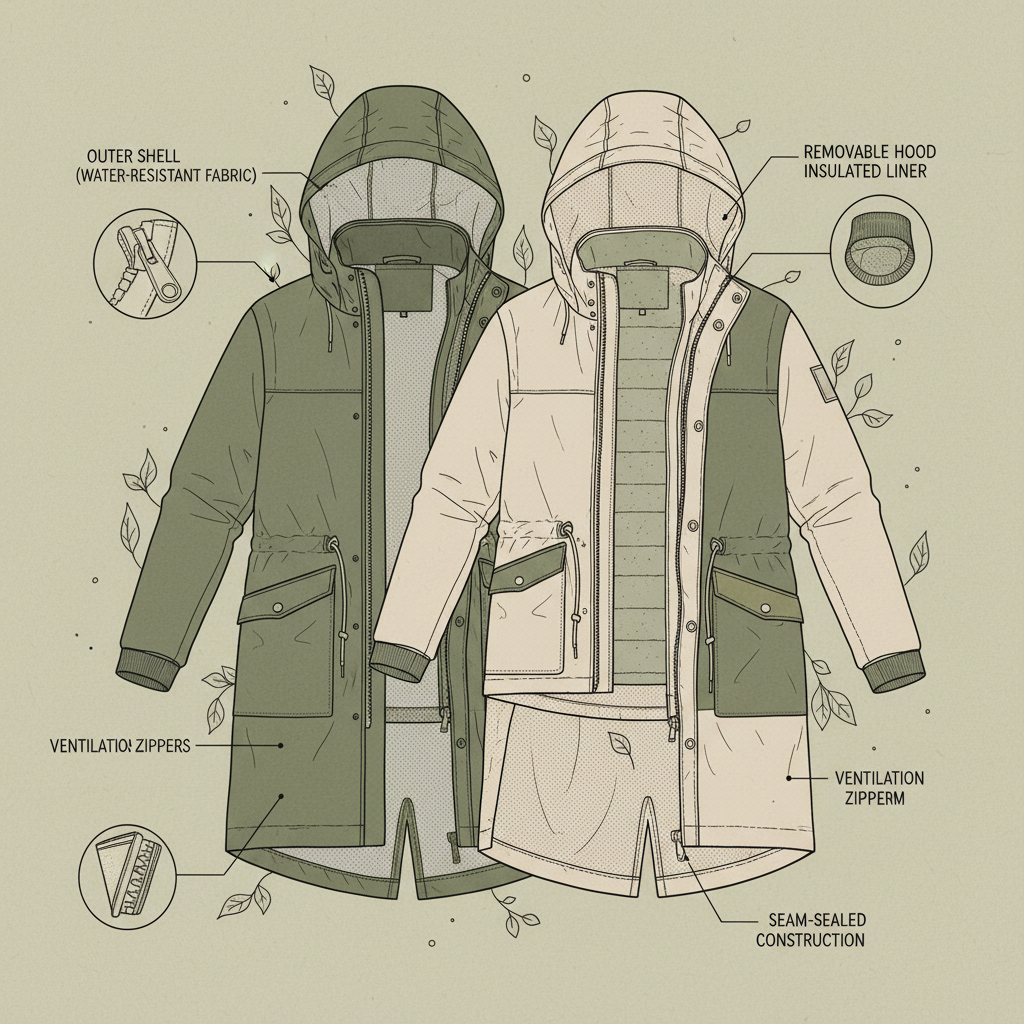
Beyond raw materials, the complexity of the garment's construction significantly alters the cost. A simple poncho requires minimal cutting and sewing, whereas a structured women's raincoat involves articulated seams, adjustable hoods, and specialized closures. The transition from simple button flaps to high-grade waterproof zippers or reinforced heat-sealed seams adds both labor time and machinery costs.
Customization also plays a critical role. The application of Pantone-specific colors, custom logo printing on the chest or back, and the integration of reflective strips for safety increase the per-unit cost. These additions require precise setup times and specialized printing equipment to ensure the logo does not peel or crack under wet conditions.
Sizing flexibility further complicates pricing. While standard S-XXL ranges are cost-efficient, supporting fully custom sizes requires a departure from mass-production templates, increasing the waste of fabric and requiring more intensive quality control checks during the cutting phase.
In the global textile industry, the cost of a garment is not merely the sum of its parts but also the cost of compliance. Adhering to international labor and safety standards ensures that products are viable for entry into strict markets like the EU and North America.
Compliance certifications such as BSCI and SMETA 4P, along with adherence to California 65 and EN71 standards, represent a systemic investment in quality management that justifies a higher price point through reduced legal and reputational risk for the importer.
When a supplier maintains these audits annually, they are investing in a strictly controlled QC system, often following AQL 2.5-4.0 inspection standards. This rigorous approach reduces the rate of defective shipments, effectively lowering the total cost of ownership for the buyer by minimizing returns and claims.
To determine if a ladies rain coat price is competitive, buyers should use a relative performance index. This involves mapping the expected lifespan and waterproof efficacy against the unit cost. For instance, an EVA poncho has a low cost but a shorter lifespan, whereas a coated polyester jacket offers a high value-to-year ratio.
The following index illustrates how different material and design choices impact the relative value index (where 10 represents the highest balance of durability and affordability for mass procurement).
In a typical corporate promotional setting, the priority is often a low ladies rain coat price for high-volume distribution. In this scenario, lightweight EVA rain ponchos with simple logo printing are the most effective solution, providing immediate utility without exceeding tight marketing budgets.
Conversely, a manufacturer evaluating rainwear for a professional workwear line must prioritize functional endurance. For these applications, a coated polyester jacket with windproof and breathable properties is necessary. The higher initial investment is offset by the garment's ability to withstand daily wear in harsh environments, making it a strategic choice for B2B procurement.
The industry is currently witnessing a transition toward environmental fabrics. The demand for recyclable plastics and biodegradable coatings is altering the cost structure of rainwear. While eco-friendly materials may initially command a premium, the scalability of production and the shift in consumer preference are normalizing these prices.
Many buyers now request testing reports for California 65 and other chemical safety standards to ensure that the waterproof coatings do not contain harmful phthalates. This shift necessitates more rigorous raw material sourcing and third-party verification, which are now integrated into the overall cost of high-quality production.
Future price trends will likely be dictated by the "circular economy" model, where the cost of a raincoat includes its end-of-life recyclability. This is leading to a preference for mono-material construction, which simplifies the recycling process but requires innovative engineering to maintain waterproof performance.
Selecting the right rainwear requires a trade-off analysis between initial cost and intended use-case. A procurement manager must decide whether the product is a "single-use" promotional item or a "long-term" asset. This decision dictates the material choice and the acceptable price range.
When comparing quotes, it is vital to look beyond the unit price and examine the MOQ (Minimum Order Quantity) and sample policy. For instance, a supplier offering free current samples and refundable model charges often indicates a more transparent and confident production pipeline.
The following table provides a comparison framework to help buyers match their requirements with the appropriate product tier and cost expectation.
| Requirement | Recommended Material | Cost Tier | Typical Use Case |
|---|---|---|---|
| High Volume/Low Cost | Lightweight EVA | Budget | Event Promotion |
| Mid-Range Durability | Standard EVA/PVC | Moderate | Retail Basics |
| High Waterproofing | Coated Polyester | Premium | Outdoor Apparel |
| Breathable/Windproof | Technical Polyester | High | Professional Gear |
| Eco-Compliant | Environmental Fabric | Premium | Sustainable Brands |
| Extreme Weather | Heavy-Duty Laminate | High | Industrial Workwear |
EVA is generally more affordable and is used for lightweight, often semi-disposable rainwear due to its simple manufacturing process. Polyester, especially when combined with a waterproof coating, is more expensive because it requires more complex weaving and chemical treatment to achieve breathability and long-term durability. Therefore, EVA is ideal for promotional budgets, while polyester is suited for retail and professional lines.
Custom printing adds to the cost based on the number of colors, the size of the logo, and the placement (e.g., chest, back, or sleeves). Using Pantone-matched colors requires specific ink mixing and screen setup. However, for large MOQs, the setup cost is amortized across thousands of units, making the per-piece increase relatively minimal while significantly increasing the brand value of the garment.
For international trade, BSCI and SMETA 4P audits are critical for verifying ethical manufacturing practices. Regarding product safety, California 65 and EN71 reports ensure that the materials—especially the waterproof coatings and dyes—are free from hazardous chemicals. These certifications provide a safety net for importers, reducing the risk of customs seizures or product recalls due to safety non-compliance.
Yes, many manufacturers support custom sizing beyond the standard S-XXL range. However, custom sizes often increase the price because they disrupt the standardized cutting patterns used in mass production. This leads to higher fabric waste and requires a separate quality control process to ensure the fit remains consistent across the custom dimensions.
The Minimum Order Quantity (MOQ) is a major factor in pricing. High MOQs allow manufacturers to optimize machine run-times and negotiate better raw material prices from fabric mills. For example, a design with an MOQ of 1,000 to 2,000 pieces allows for a more competitive unit price than a small batch, as the overhead costs of setup and sample development are spread over a larger volume.
Generally, sample production takes between 3 to 10 days. Once the sample is approved and the deposit is paid, the bulk delivery typically takes 45 to 60 days. This timeline includes fabric procurement, cutting, sewing, printing, and final QC inspections. Buyers are encouraged to plan their orders well in advance of their seasonal peaks to avoid expedited shipping costs.
Determining the optimal ladies rain coat price requires a shift from viewing the garment as a commodity to viewing it as a technical product. Whether the goal is a lightweight EVA poncho for a mass event or a high-performance coated polyester jacket for a retail line, the value is found in the alignment of material specs, compliance certifications, and manufacturing scale.
By focusing on a decision framework that weighs durability against unit cost and ensuring that the supplier adheres to global safety standards, procurement managers can secure products that not only meet their budget but also satisfy the end-user's functional needs in any weather condition.