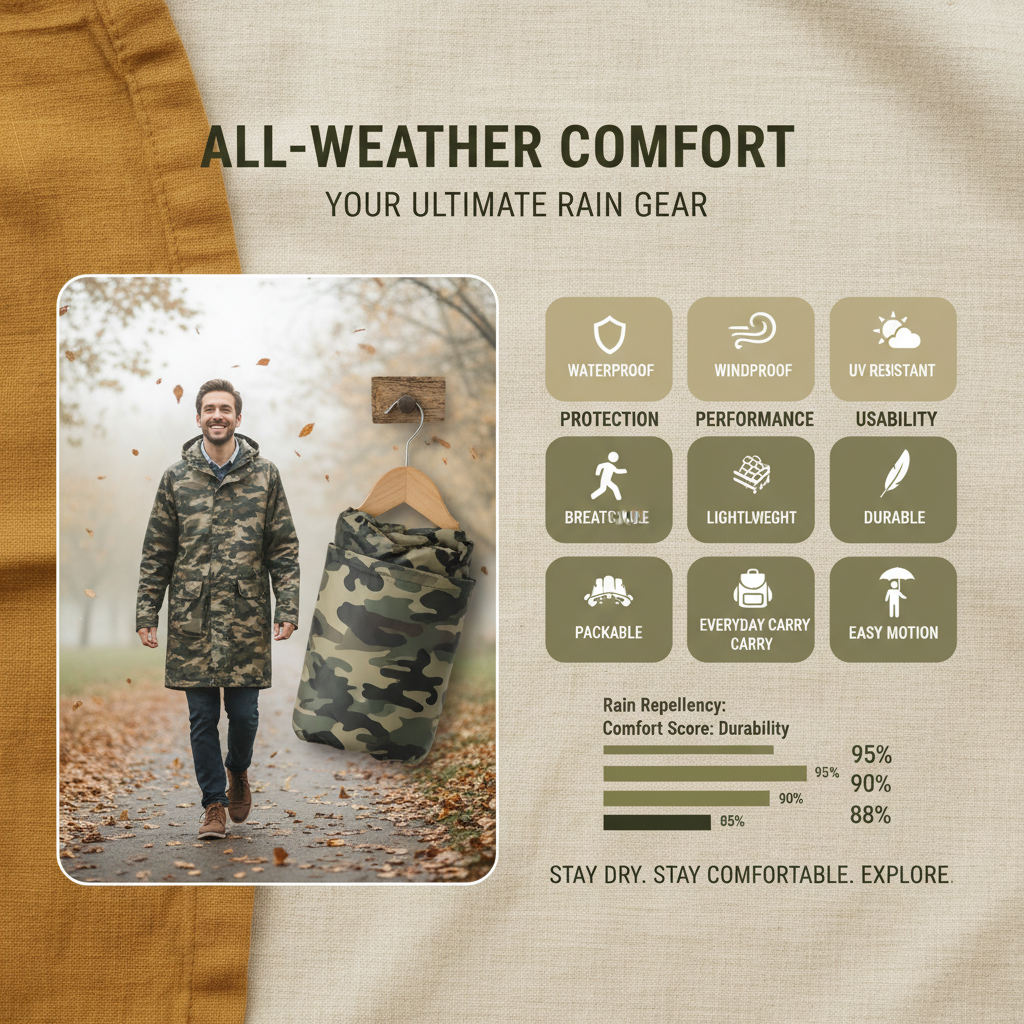
The demand for reliable protection against the elements is universal, but increasingly crucial in a world facing unpredictable weather patterns. A camo rain coat isn’t merely a piece of apparel; it’s a practical solution for outdoor enthusiasts, workers in demanding environments, and anyone needing dependable rain protection. Its functionality extends beyond simple dryness, offering a degree of camouflage and durability often required in various settings.
The global rainwear market is projected to continue expanding, driven by factors such as climate change, increased outdoor recreational activities, and growing awareness of the importance of protective clothing. From construction workers braving the elements to hikers exploring remote trails, the need for high-quality, effective rain gear is consistently present. A camo rain coat specifically addresses this need with a combination of practicality, durability, and visual adaptability.
Understanding the nuances of rainwear, particularly the advantages of camo patterns and specialized materials, is key to making informed purchasing decisions. This is more than just staying dry – it's about enhancing safety, comfort, and overall performance in challenging conditions. Investing in a quality camo rain coat can significantly improve preparedness and enjoyment of outdoor activities.
The Relevance of camo rain coat
The significance of a camo rain coat extends far beyond simply staying dry. Its relevance is intrinsically tied to occupational safety, outdoor recreation, and emergency preparedness. In industries like forestry, construction, and agriculture, workers frequently encounter harsh weather conditions where visibility and protection are paramount. Camouflage patterns, combined with waterproof materials, offer a functional advantage in these environments.
Globally, the demand for practical, durable outerwear is consistently high. According to market research, the protective clothing sector is expected to see continued growth, driven by increasing awareness of workplace hazards and the need for reliable gear. A camo rain coat serves as a critical piece of this protective infrastructure, ensuring worker safety and productivity.
Defining the camo rain coat
A camo rain coat is, at its core, a waterproof or water-resistant outer garment designed to provide protection from rain. The "camo" aspect refers to the camouflage pattern incorporated into the fabric, traditionally intended to blend the wearer into natural surroundings. However, in modern applications, camo patterns are often chosen for aesthetic reasons or as a stylistic choice, even when concealment isn't the primary goal.
These coats can range from lightweight, packable designs suitable for hiking and travel to heavier-duty, insulated versions for colder climates. Materials commonly used in their construction include polyurethane (PU), polyvinyl chloride (PVC), and breathable waterproof fabrics like Gore-Tex. The choice of material significantly impacts the coat’s breathability, durability, and overall performance.
The evolution of the camo rain coat reflects advancements in textile technology and a growing understanding of the needs of diverse user groups. From its origins as a functional tool for military personnel, it has transitioned into a versatile garment for a broad range of applications.
Key Characteristics of camo rain coat
The defining characteristics of a high-quality camo rain coat center around its ability to effectively repel water, withstand wear and tear, and provide a comfortable wearing experience. Water resistance is typically measured in millimeters (mm) of water column, indicating the amount of pressure the fabric can withstand before leaking. Higher numbers denote greater water resistance.
Durability is another crucial factor, influenced by the fabric’s denier (a unit of measure for fiber thickness) and the quality of construction. Reinforced seams, sturdy zippers, and robust closures all contribute to a coat’s longevity. Breathability, often measured in grams per square meter per 24 hours (g/m²/24h), determines how well moisture vapor can escape, preventing the wearer from becoming damp from sweat.
Finally, the camo pattern itself plays a role. While not always about concealment, a well-chosen camo pattern can enhance visibility in low-light conditions or provide a degree of visual disruption, improving safety in certain environments. A comfortable fit and practical features, such as a hood and adjustable cuffs, also contribute to the overall usability of a camo rain coat.
Applications Across Industries
The versatility of the camo rain coat is evident in its widespread adoption across numerous industries. In the agricultural sector, farmers and farmworkers rely on them for protection during inclement weather while tending to crops and livestock. Construction crews utilize them on job sites to remain dry and visible, improving safety and productivity.
The outdoor recreation industry also represents a significant market. Hikers, campers, and hunters value the camo rain coat’s lightweight portability, waterproof protection, and ability to blend into natural surroundings. Law enforcement and security personnel often employ them for tactical operations and patrol duties, leveraging the camo pattern for concealment.
Comparative Performance of camo rain coat Construction Methods
Advantages and Long-Term Value
Investing in a high-quality camo rain coat provides tangible benefits in terms of cost-effectiveness and durability. While the initial investment may be higher than a cheaper alternative, a well-constructed coat will withstand repeated use and harsh conditions, reducing the need for frequent replacements.
Furthermore, the safety aspect adds significant value. Enhanced visibility, particularly in low-light conditions, and the ability to remain dry and comfortable contribute to a safer working environment and a more enjoyable outdoor experience. This translates to increased productivity, reduced risk of accidents, and improved overall well-being.
Future Innovations in camo rain coat Technology
The future of camo rain coat technology is poised for significant advancements. Research into sustainable materials, such as bio-based polymers and recycled fabrics, is gaining momentum, offering eco-friendly alternatives to traditional petroleum-based materials. These innovations aim to reduce the environmental impact of rainwear production.
Smart textiles are also emerging, incorporating features such as self-heating capabilities, integrated sensors for monitoring environmental conditions, and improved breathability through dynamic ventilation systems. Digital printing technologies are enabling more complex and customizable camo patterns, catering to specific needs and preferences.
We can also expect to see more sophisticated waterproof coatings and seam sealing techniques, enhancing the overall performance and longevity of camo rain coat.
Challenges and Sustainable Solutions
Despite advancements in materials and manufacturing processes, several challenges remain in the production of camo rain coat. The use of harmful chemicals in the production of waterproof coatings is a significant concern, as is the generation of textile waste. Addressing these issues requires a commitment to sustainable practices throughout the supply chain.
Implementing closed-loop recycling systems, investing in bio-based materials, and adopting cleaner manufacturing processes are crucial steps towards minimizing the environmental impact. Extended producer responsibility (EPR) schemes, which hold manufacturers accountable for the end-of-life management of their products, can also incentivize sustainable design and production practices.
Promoting transparency and traceability within the supply chain is essential to ensure ethical sourcing and responsible manufacturing. Consumer awareness and demand for sustainable products will play a key role in driving these positive changes.
Summary of camo rain coat Sustainability Factors
| Material Source |
Manufacturing Impact |
Recyclability |
Overall Sustainability Score (1-10) |
| Virgin Polyester |
High Energy Consumption |
Low |
3 |
| Recycled Polyester |
Moderate |
Moderate |
6 |
| Bio-Based PU |
Lower Impact |
Moderate |
7 |
| Organic Cotton (Waterproofed) |
Waterproof Treatment Impact |
High (Compostable) |
5 |
| Recycled Nylon |
Reduced Resource Use |
Moderate |
7 |
| Plant-Based Waterproofing |
Minimal Impact |
High |
9 |
FAQS
To maximize the lifespan of your camo rain coat, always follow the care instructions on the label. Typically, this involves hand washing or using a gentle cycle in the washing machine with a mild detergent. Avoid using harsh chemicals or bleach. Allow the coat to air dry completely, away from direct heat. Regularly re-applying a waterproofing treatment can also help maintain its water resistance.
Not all camo rain coats are created equal. Some are fully waterproof, meaning they can withstand prolonged exposure to rain without letting any water in. Others are water-resistant, offering protection from light rain but may become saturated in heavy downpours. Always check the product specifications to determine the level of waterproofing.
Common materials include polyurethane (PU), polyvinyl chloride (PVC), and breathable waterproof fabrics like Gore-Tex. PU and PVC are often used for their affordability and waterproof properties, while Gore-Tex and similar fabrics offer superior breathability and durability. The choice of material depends on the intended use and budget.
Breathability is crucial, especially during activities that generate heat. A breathable camo rain coat allows moisture vapor to escape, preventing you from becoming damp and uncomfortable from sweat. This is particularly important for prolonged wear or high-intensity activities.
Yes, camo rain coats are frequently used for tactical purposes. Features to look for include a durable, waterproof fabric, reinforced elbows and shoulders, adjustable cuffs, a secure hood, and a camo pattern appropriate for the environment. Some tactical rain coats also include features like pockets for storing gear.
The production of rain coats can have a significant environmental impact due to the use of petroleum-based materials and harmful chemicals. However, sustainable options are becoming increasingly available, such as rain coats made from recycled materials, bio-based polymers, and eco-friendly waterproof coatings. Choosing these options can help reduce your environmental footprint.
Conclusion
In conclusion, the camo rain coat represents a versatile and essential piece of gear, offering protection, durability, and adaptability across a wide range of applications. From enhancing workplace safety to enabling enjoyable outdoor adventures, its value extends far beyond simply staying dry. Understanding its key characteristics, future innovations, and sustainable solutions is crucial for making informed purchasing decisions and contributing to a more responsible industry.
As technology continues to advance and environmental concerns grow, the future of the camo rain coat will be shaped by innovation and sustainability. By embracing eco-friendly materials, cleaner manufacturing processes, and a commitment to ethical sourcing, we can ensure that this valuable garment continues to serve our needs while minimizing its impact on the planet. Visit our website at www.mayraincoat.com to explore our selection of high-quality camo rain coats.
 rainwears@163.com may@may-rain.com
 Mon to Friday: 8.00 am - 7.00 pm