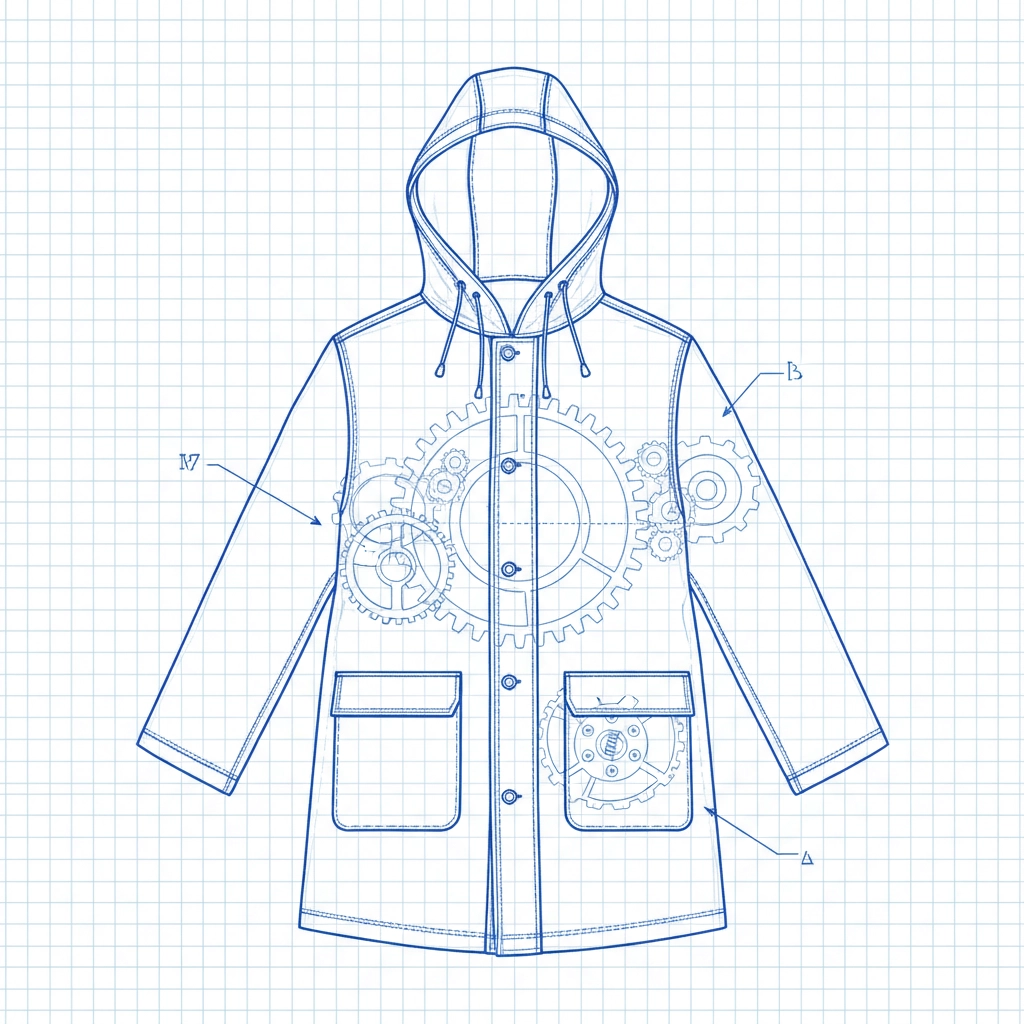
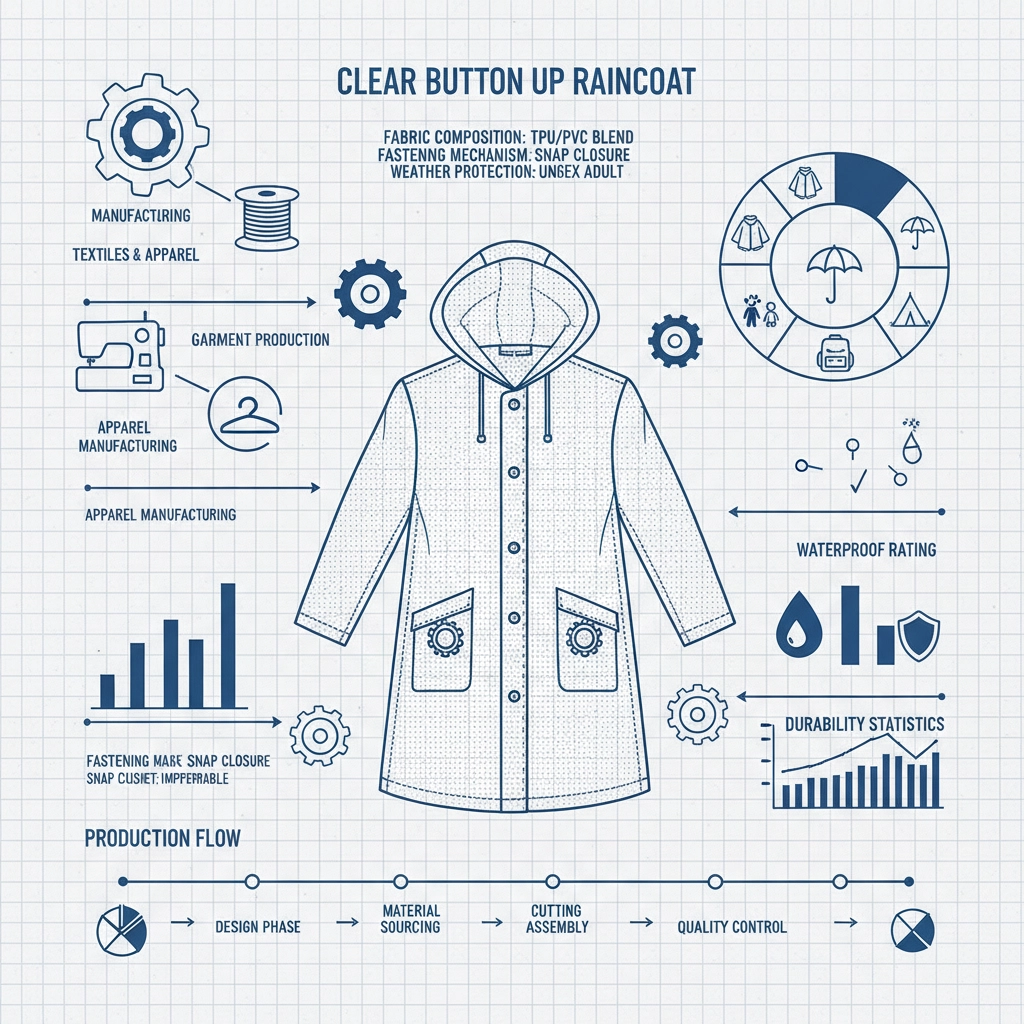
The modern outerwear market has seen a significant shift toward versatility and visibility, leading to the rise of the clear button up raincoat as a staple for both fashion-forward individuals and industrial workers. Unlike traditional opaque rain gear, these transparent garments allow the wearer to showcase their underlying attire while providing an essential barrier against the elements, blending utilitarian protection with a contemporary aesthetic.
From a global perspective, the demand for a high-quality clear button up raincoat is driven by the need for adaptive clothing that functions across various environments—ranging from music festivals and urban commutes to safety-sensitive work zones. By integrating a button-up closure, these raincoats offer a more customizable fit and easier ventilation compared to standard zip-up versions, making them a preferred choice for those who value convenience.
Understanding the nuances of material science, specifically the transition from PVC to eco-friendly EVA, is crucial for consumers and procurement managers alike. A well-designed clear button up raincoat does not merely keep the user dry; it addresses the psychological need for visibility and security in crowded or low-light rainy conditions, ensuring that style never comes at the expense of safety.
Global Relevance of the Clear Button Up Raincoat
The global demand for transparent weather-resistant gear has surged as urban populations increase and the frequency of unpredictable weather patterns rises. According to industry trends aligned with ISO quality standards for protective clothing, the clear button up raincoat has evolved from a niche fashion item into a critical piece of functional apparel. Its relevance spans continents, from the monsoon-heavy regions of Southeast Asia to the rainy autumns of Northern Europe.
The primary challenge this garment addresses is the conflict between protection and visibility. In security-sensitive environments or high-traffic urban areas, being able to see and be seen is paramount. The transparency of the clear button up raincoat ensures that identification badges or specific uniforms remain visible, while the button-up mechanism provides a reliable, manual closure system that is often more durable than thin plastic zippers in harsh conditions.
Defining the Clear Button Up Raincoat and Its Purpose
At its core, a clear button up raincoat is a water-repellent garment constructed from transparent polymers—typically EVA (Ethylene Vinyl Acetate) or PVC—featuring a front closure consisting of a series of buttons rather than a zipper or snap-fasteners. This design choice allows for a more "breathable" experience, as users can leave top buttons open to regulate temperature without compromising the overall waterproof integrity of the garment.
Beyond simple rain protection, this specific style of raincoat serves a modern humanitarian and industrial need for "neutral" clothing. In various professional settings, such as event management or light industrial supervision, the wearer needs to remain protected from the rain while maintaining a professional appearance that doesn't obscure their corporate identity or safety gear. The clear button up raincoat fulfills this by acting as a transparent shield.
Furthermore, the "button-up" aspect is a nod to classic tailoring, transforming a piece of plastic rainwear into something that feels more like a garment and less like a disposable poncho. This shift in design philosophy emphasizes longevity and reuse, moving away from the "single-use" culture and toward a more sustainable approach to accessories and protective wear.
Core Components of High-Quality Rainwear
When evaluating a clear button up raincoat, the first critical component is material durability. High-grade EVA is preferred over PVC because it is non-toxic, phthalate-free, and offers better flexibility in cold temperatures, preventing the raincoat from cracking or becoming stiff.
The second essential factor is the precision of the seam sealing. A clear button up raincoat is only as effective as its weakest joint; therefore, high-frequency welding is utilized to ensure that water cannot penetrate the seams, maintaining a 100% waterproof barrier regardless of the rain's intensity.
Finally, the hardware—specifically the buttons and buttonholes—must be reinforced. In a clear button up raincoat, the stress points around the buttons are the most likely areas for wear. Using reinforced gaskets around each button ensures that the garment maintains its structural integrity over years of repeated use.
Practical Applications Across Various Sectors
The versatility of the clear button up raincoat makes it an invaluable tool across diverse industries. In the hospitality and event sector, staff use these raincoats to stay dry while ensuring their uniforms and name tags are clearly visible to guests. In the realm of fashion and festivals, they have become a "must-have" accessory, allowing attendees to protect expensive outfits without hiding their style.
Moreover, in specialized industrial zones, such as food processing or pharmaceutical clean rooms, a transparent clear button up raincoat serves as a hygienic outer layer that prevents contamination while allowing supervisors to monitor the wearer's compliance with under-layer safety protocols.
Performance Comparison of Clear Button Up Raincoat Variants
Long-Term Value and Sustainability Benefits
Investing in a premium clear button up raincoat provides significant long-term value by reducing the reliance on disposable plastic ponchos. While a disposable poncho may cost pennies, its lifespan is often a single rainstorm, leading to massive amounts of plastic waste in landfills and oceans. In contrast, a durable, button-up version is designed for years of service, offering a far lower "cost-per-wear" ratio.
From an emotional and psychological standpoint, the reliability of a high-quality clear button up raincoat instills a sense of confidence and dignity. Whether it is a professional maintaining their composure during an outdoor site visit or a parent keeping a child dry during a school event, the trust that the garment will not leak or tear provides a level of security that cheap alternatives cannot match.
Future Innovations in Transparent Materials
The future of the clear button up raincoat lies in the integration of "smart" materials. We are seeing the emergence of hydrophobic nano-coatings that not only repel water but also prevent the "fogging" effect common in transparent plastics. This ensures that the visibility—the primary selling point of the clear raincoat—remains crystal clear even in high-humidity environments.
Furthermore, the push toward a circular economy is driving the development of bio-based transparent polymers. These new materials aim to replicate the clarity and strength of EVA but are derived from renewable cornstarch or algae, making the next generation of clear button up raincoat fully compostable at the end of its lifecycle.
Automation in manufacturing is also playing a role, with 3D seamless knitting and precision laser cutting reducing material waste during production. This digital transformation allows for a more tailored fit in clear raincoats, moving away from the "one size fits all" approach toward more ergonomic, body-mapped designs.
Overcoming Challenges in Raincoat Manufacturing
One of the most persistent challenges in producing a clear button up raincoat is the balance between waterproofness and breathability. Because plastic is naturally non-porous, heat can build up inside the garment. To solve this, manufacturers are implementing hidden ventilation eyelets under the armpits and strategically placing the buttons to allow for manual airflow control.
Another issue is the "yellowing" effect that occurs when transparent plastics are exposed to UV rays over time. To combat this, the industry is incorporating UV-stabilizers into the polymer mix. This chemical innovation ensures that the clear button up raincoat remains transparent and aesthetically pleasing throughout its entire lifespan.
Finally, the challenge of button security in soft plastics is being solved through the use of reinforced backing plates. By adding a small, clear circular reinforcement behind the buttonhole, manufacturers prevent the material from stretching or tearing, ensuring that the closure remains secure even under the tension of movement.
Comparative Analysis of Clear Button Up Raincoat Material Specifications
|
Material Type
|
Transparency Level
|
Durability Score (1-10)
|
Eco-Friendliness
|
| Premium EVA |
High |
9 |
High (Phthalate-Free) |
| Standard PVC |
Very High |
7 |
Low |
| TPU Film |
Medium-High |
10 |
Medium |
| Recycled PE |
Medium |
6 |
Very High |
| Bio-Acetate |
High |
8 |
Very High |
| Heavy Duty Vinyl |
Medium |
9 |
Low |
FAQS
Unlike a poncho, which is often a loose, single-sheet garment, a clear button up raincoat is tailored for a better fit and features a secure front closure. The buttons allow the wearer to adjust the opening for ventilation, and the structured design ensures that the coat stays in place during wind, offering superior protection and a more professional appearance.
Most transparent polymers are naturally non-breathable. However, the "button-up" design is specifically intended to solve this. By leaving a few buttons open, users can create a natural chimney effect for airflow. Additionally, high-end versions now incorporate discreet ventilation eyelets to reduce condensation and heat buildup inside the coat.
It depends on the material. Raincoats made from EVA or TPU are more easily processed in specialized recycling facilities than those made from traditional PVC. We recommend choosing EVA-based garments, as they are phthalate-free and more compatible with modern eco-friendly recycling streams aimed at reducing plastic pollution.
Lower-quality clear raincoats can yellow due to UV exposure. However, professional-grade clear button up raincoats are treated with UV-stabilizers during the manufacturing process. This prevents the polymer chains from breaking down under sunlight, ensuring the garment remains transparent and clear for several seasons of use.
To maintain the clarity and life of your clear button up raincoat, avoid machine washing. Instead, wipe the surface with a damp cloth and a mild soap solution. To prevent creases, hang it on a wide hanger in a cool, dry place. Avoid folding it tightly for long periods, as this can leave permanent marks on the plastic.
Clear raincoats act as an excellent windbreaker and water barrier, but they provide no thermal insulation. For extreme cold, we suggest wearing the clear button up raincoat as an outer shell over a fleece or wool jacket. Because it is transparent, your winter layers will still be visible while you stay completely dry.
Conclusion
The clear button up raincoat represents a perfect intersection of form and function, solving the age-old problem of maintaining visibility and style during inclement weather. By focusing on high-quality materials like EVA and precision engineering in seam sealing and button reinforcement, these garments have transitioned from disposable accessories to durable, long-term investments in personal protection.
As we move toward a future defined by sustainable materials and smart textiles, the evolution of transparent rainwear will likely lead the way in eco-friendly protective apparel. We encourage consumers and businesses to prioritize durability over disposability, ensuring that their choice of rainwear protects not only the wearer but also the planet. For premium, durable solutions, visit our website: www.mayraincoat.com
 rainwears@163.com may@may-rain.com
 Mon to Friday: 8.00 am - 7.00 pm