rainwears@163.com may@may-rain.com
 Mon to Friday: 8.00 am - 7.00 pm
 rainwears@163.com may@may-rain.com Mon to Friday: 8.00 am - 7.00 pm


Backpacking rain ponchos are essential gear for any outdoor enthusiast, offering crucial protection from the elements during adventures. They are lightweight, packable, and provide a vital barrier against rain, wind, and even snow, ensuring a more comfortable and safe experience in unpredictable weather conditions. The demand for reliable and durable backpacking rain ponchos is steadily increasing alongside the growing popularity of hiking, camping, and other outdoor activities globally.
The relevance of a quality backpacking rain poncho extends beyond recreational use. They are frequently deployed in emergency preparedness kits, disaster relief efforts, and are valuable assets for individuals living in regions prone to heavy rainfall or unpredictable climates. Understanding the nuances of these ponchos – from materials and construction to features and functionality – is crucial for making informed purchasing decisions and ensuring optimal protection.
Choosing the right backpacking rain poncho isn’t merely about staying dry; it's about maintaining body temperature, preventing hypothermia, and preserving overall enjoyment during outdoor pursuits. This guide aims to provide a comprehensive overview of backpacking rain ponchos, covering their key features, applications, and future trends.
Durability is paramount when selecting a backpacking rain poncho. The poncho must withstand the rigors of outdoor use, including abrasion against rocks, branches, and rough terrain. A tear-resistant fabric, reinforced seams, and a robust construction are crucial for longevity, minimizing the risk of failure during critical moments.
The denier (D) rating of the fabric is a key indicator of durability, with higher denier values generally signifying stronger materials. Look for ponchos constructed from materials like ripstop nylon or polyester, known for their exceptional tear strength and resistance to punctures. Regularly inspecting your backpacking rain poncho for damage and addressing minor repairs promptly can significantly extend its lifespan.
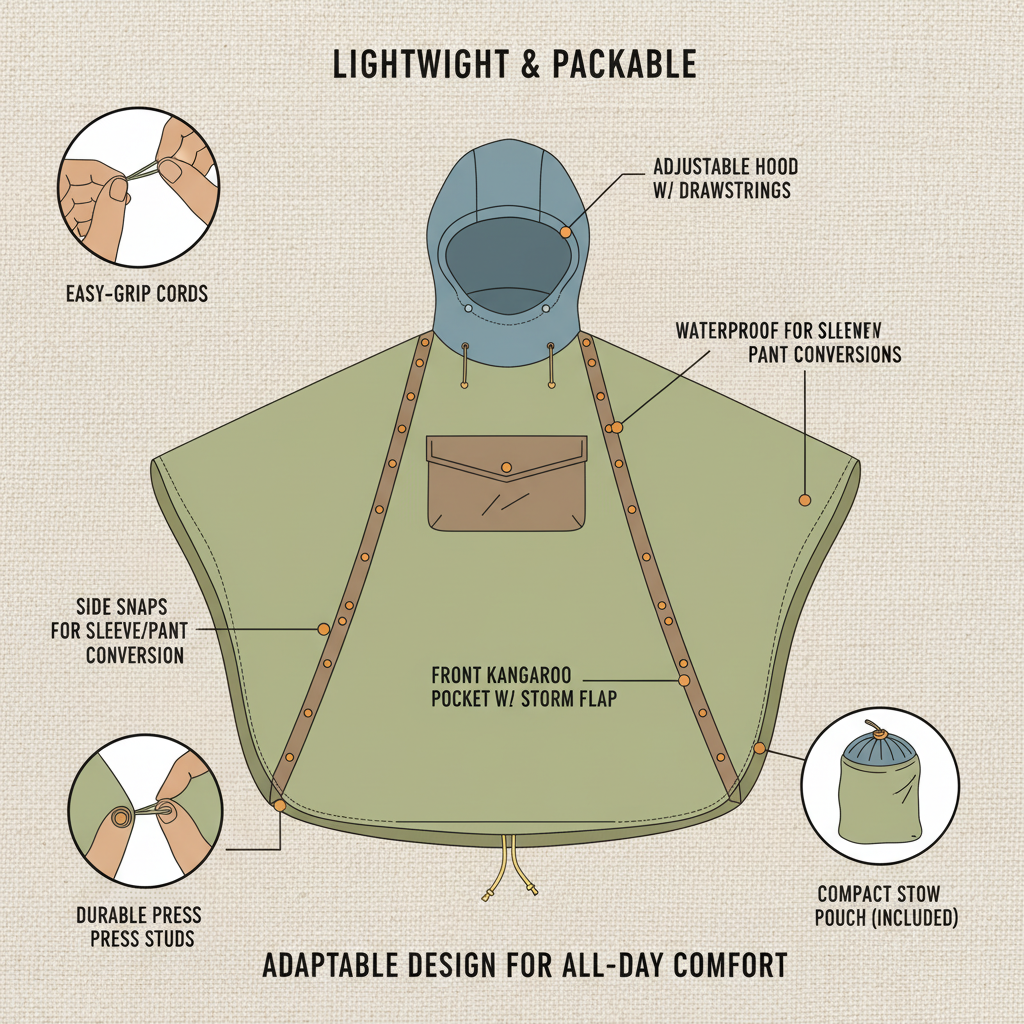
Beyond the core materials, several features can enhance the functionality and comfort of a backpacking rain poncho. These include a hood (adjustable is preferred), drawcords at the neck and hem, side snaps or Velcro closures for ventilation, and reinforced seams.
A well-designed hood should provide full coverage of the head and neck, while allowing for adequate peripheral vision. Drawcords help to seal out rain and wind, while side snaps or Velcro closures provide ventilation to prevent overheating. Reinforced seams prevent water from leaking through stress points.
Backpacking rain ponchos find application in a diverse range of settings worldwide. From avid hikers navigating the Appalachian Trail in the United States to mountaineers scaling peaks in the Himalayas, these ponchos provide essential protection from inclement weather.
In post-disaster relief operations, backpacking rain ponchos are often included in emergency supply kits, offering immediate shelter and protection to affected populations. They're also valuable for agricultural workers in regions with frequent rainfall, allowing them to continue their work without being hampered by the elements.
The advantages of investing in a high-quality backpacking rain poncho are numerous. Beyond providing immediate protection from the elements, a durable poncho can significantly enhance safety and comfort during outdoor activities. This translates to a more enjoyable and rewarding experience.
From a long-term perspective, a well-maintained backpacking rain poncho can last for years, offering substantial cost savings compared to repeatedly purchasing cheaper, less durable alternatives. Choosing a poncho made from sustainable materials also contributes to environmental responsibility, promoting a more ethical and eco-friendly outdoor lifestyle.
The future of backpacking rain poncho technology is focused on enhancing both performance and sustainability. Expect to see increasing use of bio-based and recycled materials, reducing the environmental impact of poncho production.
Innovations in fabric technology, such as self-healing materials and advanced DWR coatings, are also on the horizon. Integration of smart features, like embedded sensors to monitor temperature and humidity, may further enhance the functionality of backpacking rain ponchos in the years to come.
| Material Composition | Waterproof Rating | Breathability Score (1-10) | Average Lifespan (Years) |
|---|---|---|---|
| Polyurethane (PU) Coated Nylon | 5,000mm - 10,000mm | 4 | 3-5 |
| Polyester with PU Coating | 2,000mm - 5,000mm | 3 | 2-4 |
| Gore-Tex (PTFE) | 20,000mm+ | 9 | 7-10+ |
| TPU Coated Nylon | 10,000mm - 20,000mm | 7 | 5-8 |
| Recycled Polyester with DWR | 3,000mm - 7,000mm | 5 | 3-6 |
| Ripstop Nylon with Silicone Coating | 4,000mm - 8,000mm | 6 | 4-7 |
While both offer protection from rain, a backpacking rain poncho typically provides more coverage, extending down the back and often over a backpack. Ponchos are generally looser-fitting, allowing for better ventilation, while rain jackets offer a more fitted, performance-oriented design. Ponchos are easier to put on and take off quickly, and often more affordable.
Regularly clean your poncho with mild soap and water, avoiding harsh detergents or bleach. After washing, allow it to air dry completely, away from direct sunlight. Periodically reapply a DWR coating to maintain its water repellency. Store your poncho in a dry, well-ventilated place when not in use.
A waterproofness rating of at least 2,000mm is generally considered adequate for light rain, but for more severe conditions, aim for a rating of 5,000mm or higher. Higher ratings indicate greater waterproofness, but also potentially lower breathability. Consider the typical weather conditions you’ll encounter when selecting a rating.
Yes, ponchos made from materials like PTFE (Gore-Tex) or TPU generally offer superior breathability compared to those made with PU coatings. Look for ponchos with ventilation features, such as side snaps or pit zips, to further enhance airflow and prevent overheating.
Essential features include a hood with adjustable drawcords, a generous cut that allows for layering, and durable construction. Reinforced seams and a reliable waterproof coating are also crucial. Additional features like side snaps and a stuff sack can enhance convenience and usability.
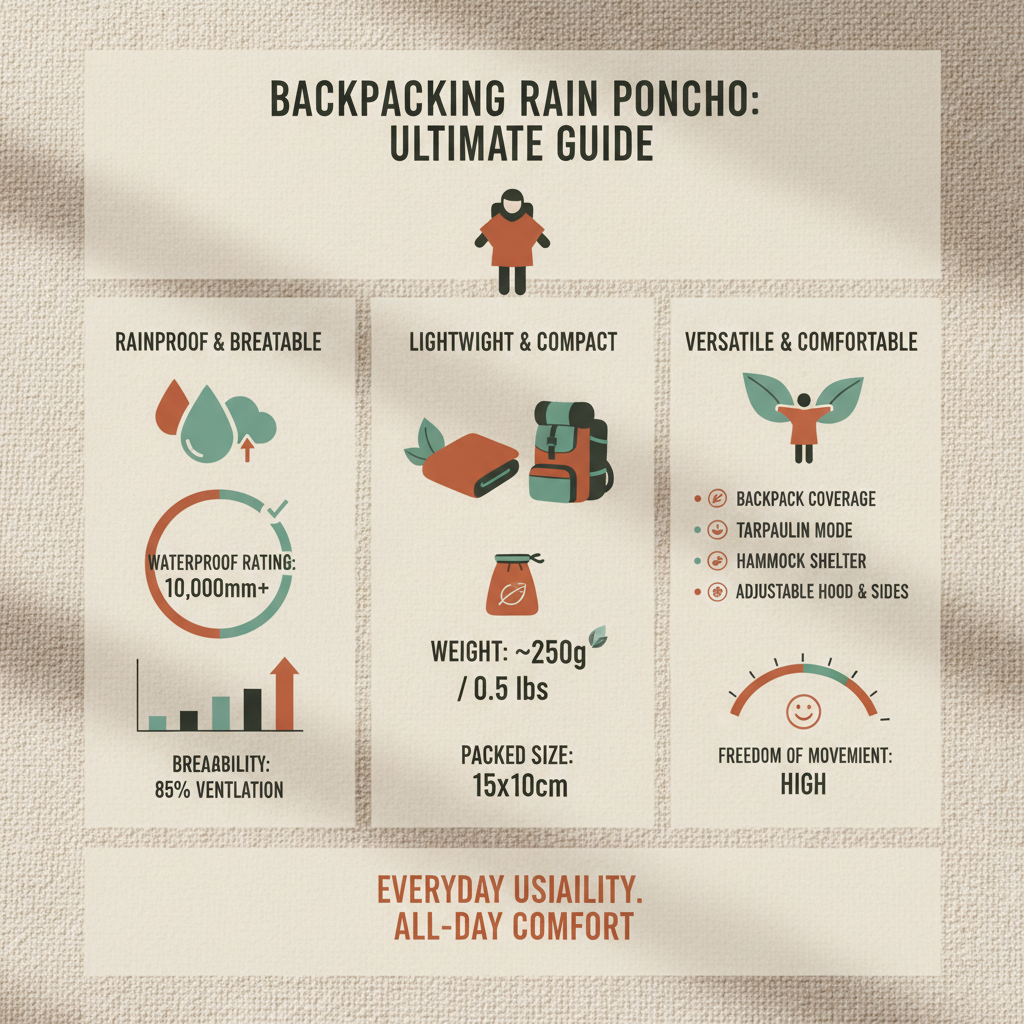
A good backpacking rain poncho should pack down small enough to fit comfortably inside your backpack without taking up too much space. Look for ponchos that come with their own stuff sack or can be easily compressed. Aim for a packed size of around 8x6x4 inches or smaller.
In conclusion, a backpacking rain poncho is an indispensable piece of gear for any outdoor adventure. Choosing the right poncho requires careful consideration of factors like durability, materials, weight, packability, and features. Investing in a high-quality poncho can significantly enhance your comfort, safety, and enjoyment during outdoor activities, protecting you from the elements and allowing you to fully immerse yourself in the experience.
As technology continues to advance, we can expect to see even more innovative and sustainable backpacking rain poncho designs emerge. By staying informed about the latest trends and carefully evaluating your individual needs, you can select a poncho that provides reliable protection and lasting value. Visit our website at May Raincoat to explore our range of high-quality backpacking rain ponchos.